Installing a wall light on a DCL box: the honest guide
In short: if a DCL outlet already exists, installing a wall light takes about 30 minutes and requires no electrical skills: turn off the circuit breaker, clip in a standardized plug, drill two holes and screw it in. An electrician is only necessary in three cases: no outlet at the desired location, an ungrounded installation, or wiring you don't understand.
Installation anxiety is the main barrier to buying a wall light. It is largely disproportionate — provided you have a DCL. Without a DCL, it is justified.
If you haven't yet decided on the location, start by lighting a room without a ceiling light: you drill better when you know why.
What is a DCL box?
DCL stands for Device for Connecting a Luminaire. It is a standardized system, required by the NF C 15-100 standard for light points in new and renovated homes since the early 2000s.
In practical terms, it is an outlet. The luminaire is equipped with a male plug, the wall with a female socket. Clip it in, and it's connected. You don't touch any bare wires.
How to recognize it: a round or square recessed box, often covered by a white cover, with inside either a pre-wired three-terminal socket or a connector (DCL terminal block) ready to receive the luminaire's wires.
Does it apply to you? The decision tree
1. Remove the wall cover (circuit breaker off). What do you see?
| What you see | Verdict |
|---|---|
| A DCL box with a socket or standardized terminal block | Install it yourself, 30 min |
| Three wires: brown/red, blue, green-yellow | Install it yourself, 40 min (connection to the provided terminal block) |
| Two wires only, no green-yellow | Ungrounded installation — see below |
| Aluminum wires (flexible grey), or fabric | Electrician |
| Nothing at all, solid wall | Electrician, or change your approach |
2. No outlet at the desired location? Three options: have a line run (150 to 350 € depending on the configuration), move the project to a location where an outlet exists, or switch to a no-work solution — wall light for renters.
The equipment: four tools, no more
- A flat-head and a Phillips screwdriver
- A drill with the bit suited to your wall
- A spirit level (or the level app on your smartphone)
- A voltage tester (VAT) — 10 to 20 €, the only non-negotiable purchase
- A pencil, a tape measure
Optional but useful: a cable and metal detector (~25 €), especially near a switch or an outlet.
The 7 steps
1. Turn off at the circuit breaker, not the switch
The switch only cuts one wire. Turn off the corresponding circuit breaker on the panel, or the main one if you don't know which one. Warn the other occupants.
2. Check with the tester
On each wire, one by one. Thirty seconds that distinguish a safe installation from a random one. Tester off on all wires: you can continue.
3. Locate and mark
Hold up the mounting plate. Mark the two holes with a pencil. Check the level before drilling, not after.
The mounting hole is almost never at the same height as the center of the luminaire. If you are aiming for a precise height, measure the difference — method in installation height.
4. Drill and use wall plugs according to your wall
This is where 90% of failed installations happen. The wall plug supplied in the box is rarely the right one.
| Wall type | Suitable wall plug | Indicative load |
|---|---|---|
| Plasterboard (BA13) | Expanding metal Molly-type wall plug | 10 to 25 kg |
| Plasterboard, light load | Finned nylon wall plug | 3 to 8 kg |
| Concrete, stone | Standard nylon wall plug, concrete drill bit | 20 kg+ |
| Hollow brick | Special hollow brick wall plug (long expansion) | 10 to 20 kg |
| Plaster tile | Long nylon wall plug, or Molly | 5 to 15 kg |
Simple rule: if the wall sounds hollow, it is plasterboard or hollow brick, and the conical plastic wall plugs supplied in the box will not hold. This is the #1 reason for frustration in reviews, across all brands. A set of Molly wall plugs costs less than 10 € at a large hardware store and solves the problem once and for all.
5. Connect
- With DCL: clip the luminaire's plug into the socket. Done.
- With bare wires: open the DCL terminal block, insert brown with brown (phase), blue with blue (neutral), green-yellow with green-yellow (ground), close it. Gently pull on each wire to check the crimping.
If your luminaire bears the double square symbol (Class II), it is doubly insulated and has no ground wire: this is normal. Leave the green-yellow from the wall isolated in the box, without cutting it.
6. Fix and screw
Tighten without forcing. Excessive tightening cracks the plasterboard or splits a plate.
7. Turn on the power and test
Turn on, turn off, turn on again. No humming, no flickering. Humming with a dimmer is not an installation error but a compatibility issue — actually dimmable.
The three cases where you really need an electrician
1. There is no electrical outlet at the desired location. Creating a line involves cutting into a wall, pulling a conduit, connecting to the panel. Allow 150 to 350 € depending on the distance and wall type.
2. The installation has no ground. Unrenovated older homes are often devoid of it. A Class II luminaire can be installed there, but first have the installation checked: the absence of ground often indicates other non-conformities.
3. You don't understand what you see. Aluminum wires, fabric conduit, non-standard colors, overloaded box. Close up and call.
What it really costs
| Scenario | Cost |
|---|---|
| Existing DCL, install it yourself | 0 € (+ 20 € for tools if you have nothing) |
| Existing DCL, install by a tradesman | about 100 to 150 € for a pair |
| Creation of an electrical line | 150 to 350 € per point |
| Complete standardization of a room | Quote required |
The figure to remember: if you have a DCL, installation should not be a purchasing criterion. Thirty minutes, two holes.
The most frequent mistakes
- Using the wall plugs supplied in the box on plasterboard. They are sized for concrete.
- Not turning off at the circuit breaker because "the switch is off".
- Drilling without checking the level, then filling it back in.
- Installing the two wall lights of a pair at different heights. Mark the two points at the same time.
- Cutting the ground wire because the luminaire doesn't have one. It must be isolated and left in place.
Frequently asked questions
Can you install a wall light yourself?
Yes, if a DCL outlet or a cable outlet already exists. About 30 minutes, without electrical knowledge, provided you turn off the circuit breaker and check for the absence of voltage.
What is a DCL box?
A Device for Connecting a Luminaire: a standardized outlet required by the NF C 15-100. The luminaire clips into it with a plug, without handling a bare wire.
What wall plug to use to fix a wall light on plasterboard?
A metal expanding Molly-type wall plug (10 to 25 kg). The conical plastic wall plugs supplied in the boxes are intended for concrete.
How much does installation by an electrician cost?
About 100 to 150 € for a pair on an existing DCL. 150 to 350 € per point if a line needs to be created.
What to do if my luminaire has no ground wire?
If it bears the double square symbol, it is Class II. Isolate the green-yellow wire from the wall and leave it in place, without cutting it.
Before ordering
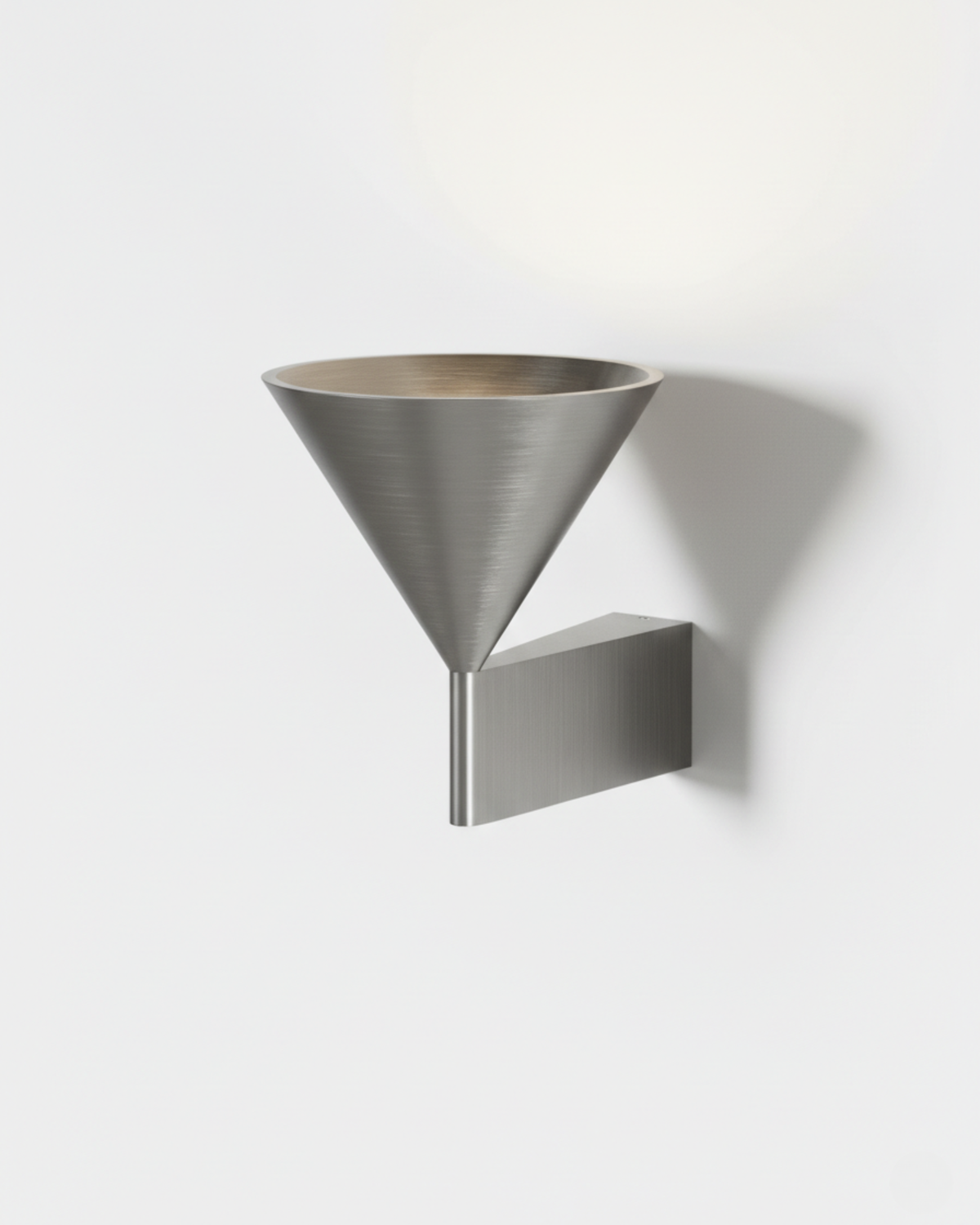
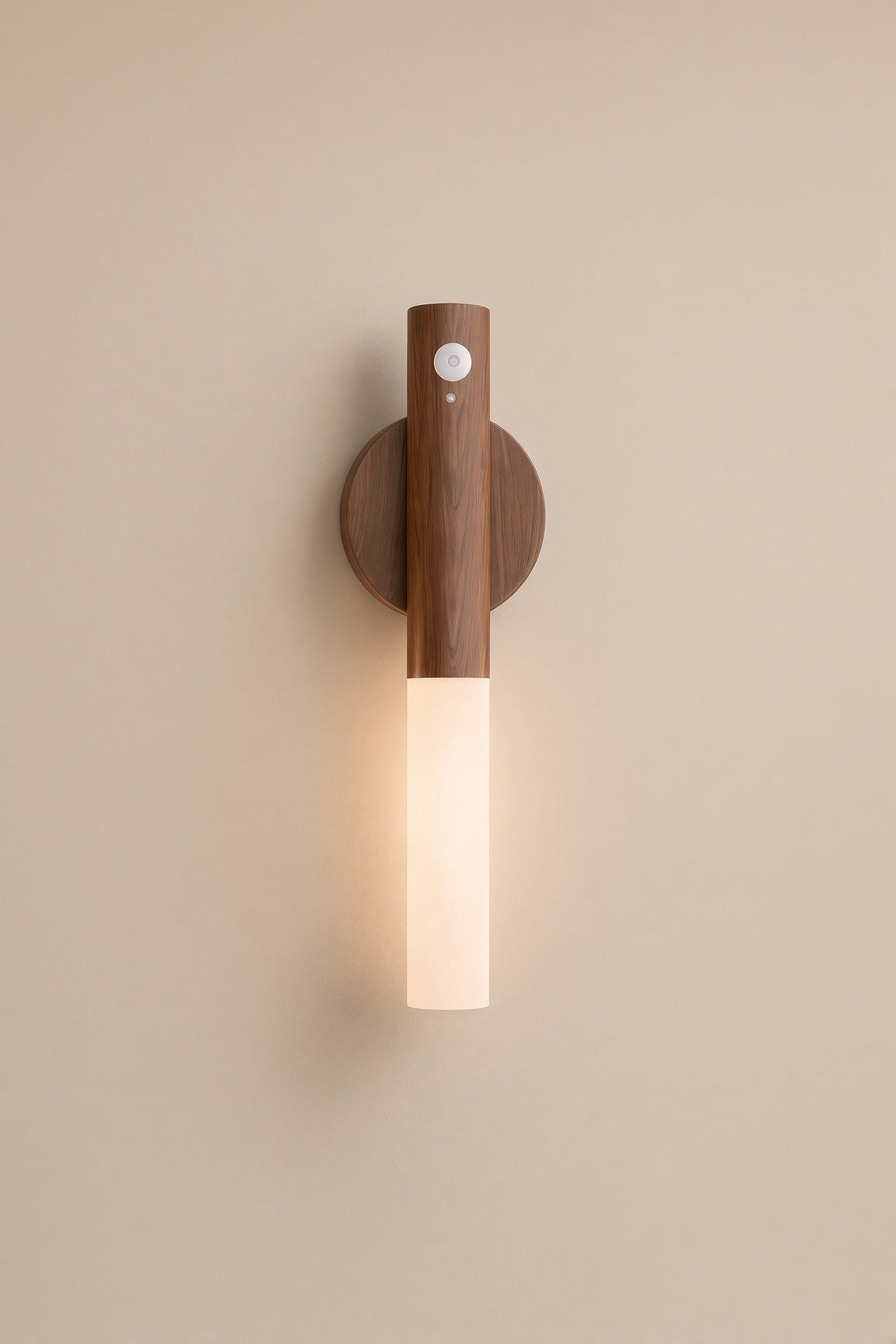
First check what is behind your wall cover: this information, not the model, determines the difficulty. The 220 V wired wall lights from faubourg & fils connect to an existing outlet; if you don't have one, the Wireless & No-Drilling collection completely avoids the question.