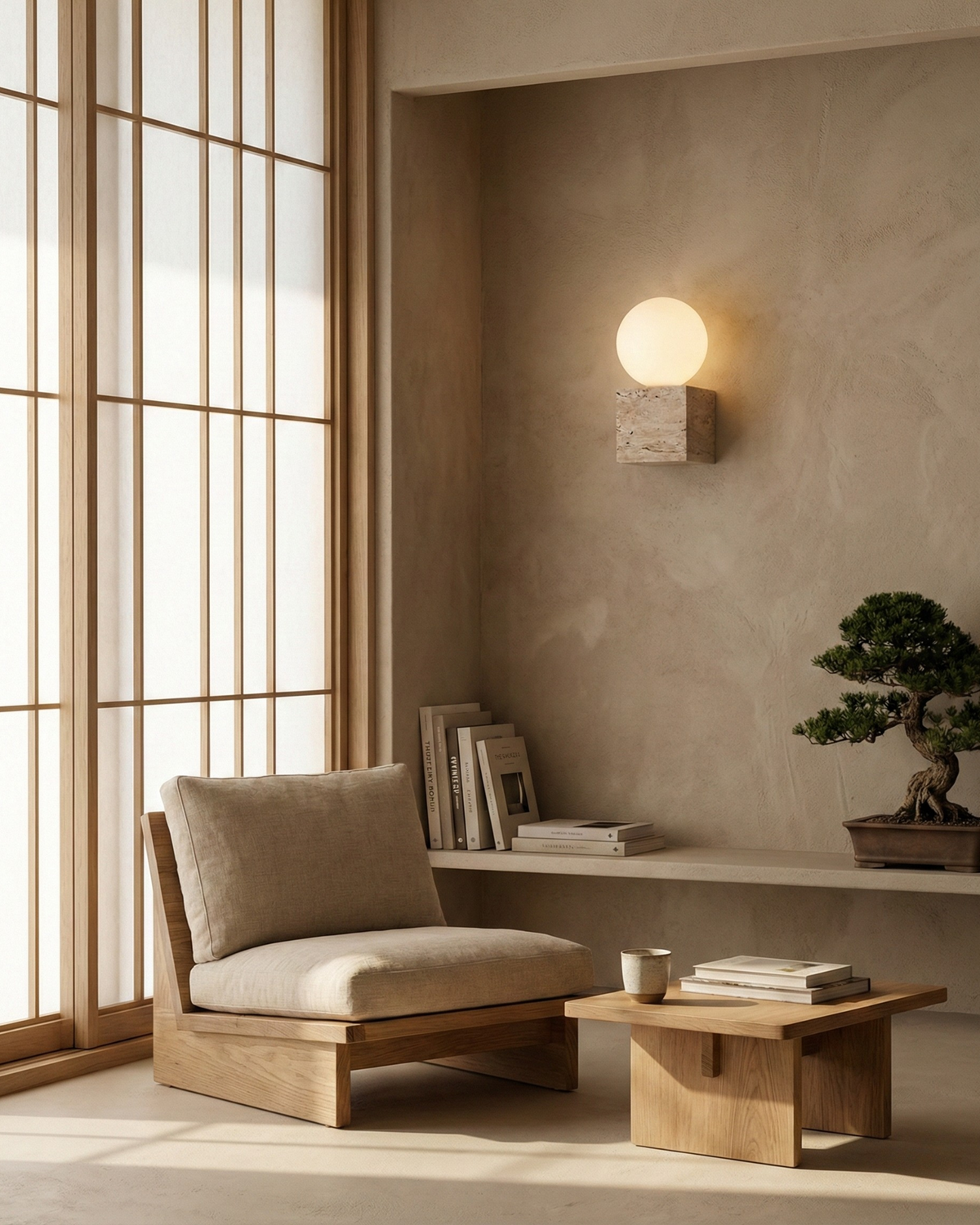
Article: How to light a bedroom without a ceiling light

How to light a bedroom without a ceiling light
In short: to light a bedroom without a ceiling light, replace a single source with three layers—a wall-mounted ambient light between 1.50 and 1.65 m, a reading light at eye level while seated, and a low decorative light. Allow for two to four 8- to 15-W sources in 2700–3000 K, rather than a single 40-W ceiling light.
Your bedroom is clean. The paint is fresh, the bed is well chosen, the parquet is new. And yet, in the evening, something feels off: the room looks flat, a bit institutional. It's not the decor. It's the position of the light.
A single ceiling light illuminates from above, vertically, evenly. It crushes volumes, flattens textures, and casts shadows under the eyes. It's the lighting of a hospital corridor—and that's why no hotel, no restaurant, no bar works like that.
Here is the method to fix it without breaking everything.
Why a ceiling light alone cannot work
Three physical reasons, not aesthetic ones.
1. The angle is bad. Light falling vertically reveals no relief. A textured wall, a wool throw, a fluted headboard: everything looks flat. Grazing or indirect light, on the other hand, brings out the material.
2. The source is too high and too singular. The eye reads a room like a landscape: it needs light sources at different heights. A single source at 2.50 m is a landscape without relief.
3. The intensity is calibrated for function, not for the evening. A ceiling light must be able to light the room when you are looking for a sock under the bed. That level of power is aggressive at 10 p.m. Result: many people end up never turning it on, and find themselves with a single bedside lamp in a dark room.
The three-layer method
This is the principle used by interior designers and, systematically, in the hotel industry. It is not about adding light, but about distributing it.
Layer 1—The ambiance (the one that changes everything)
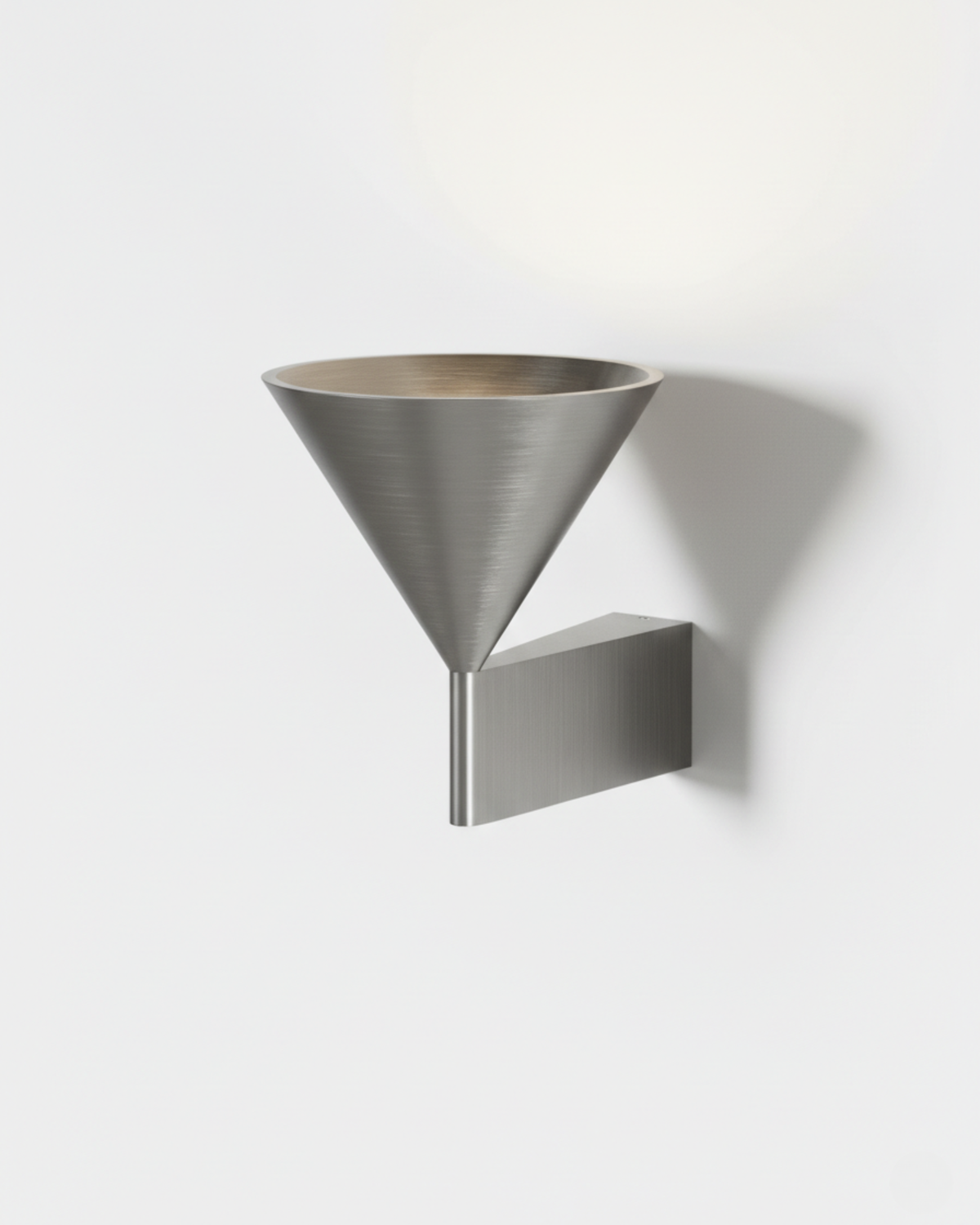
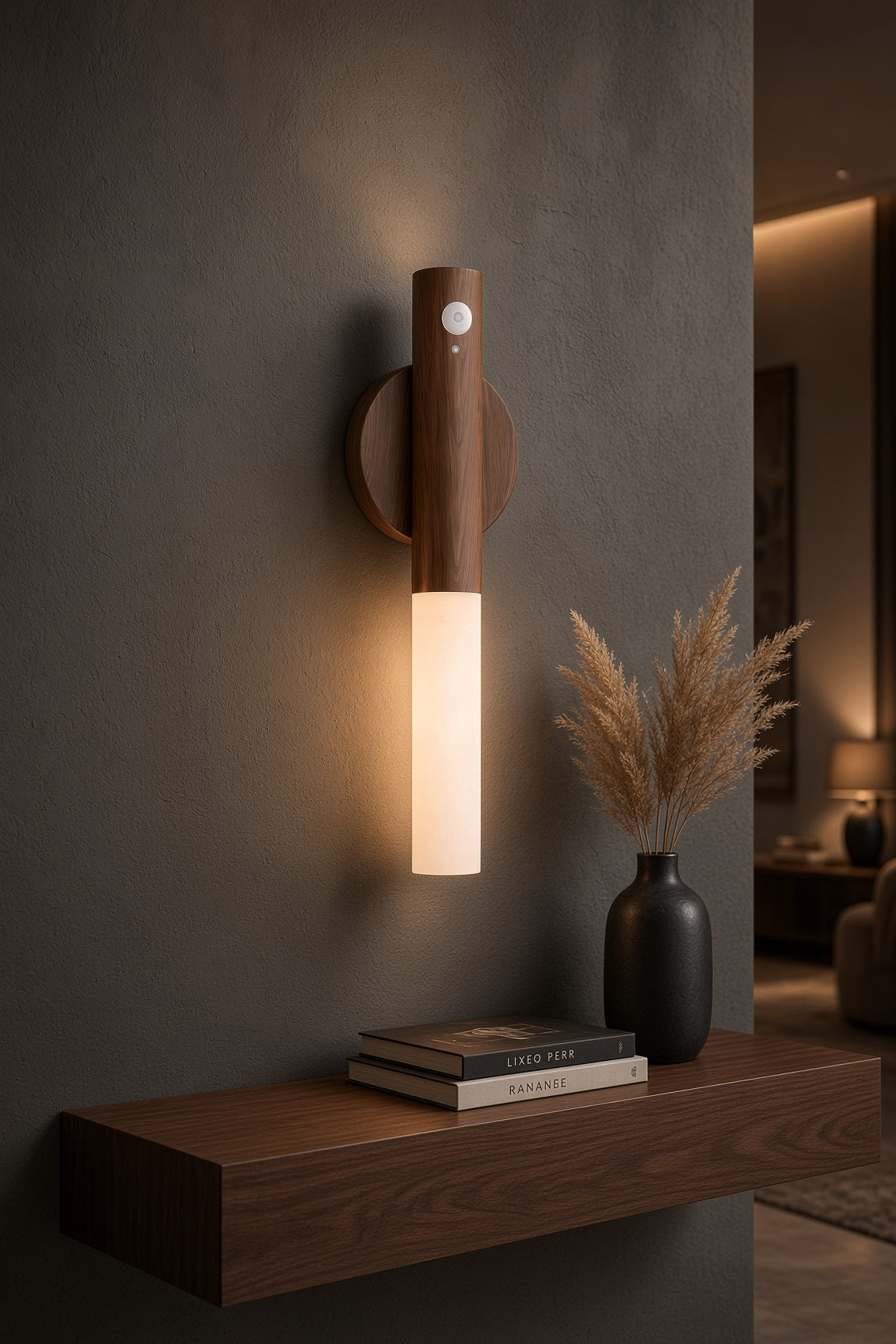
This is the light that fills the room without ever being looked at directly. It comes from a wall source that sends its light upwards, downwards, or through a diffuser.
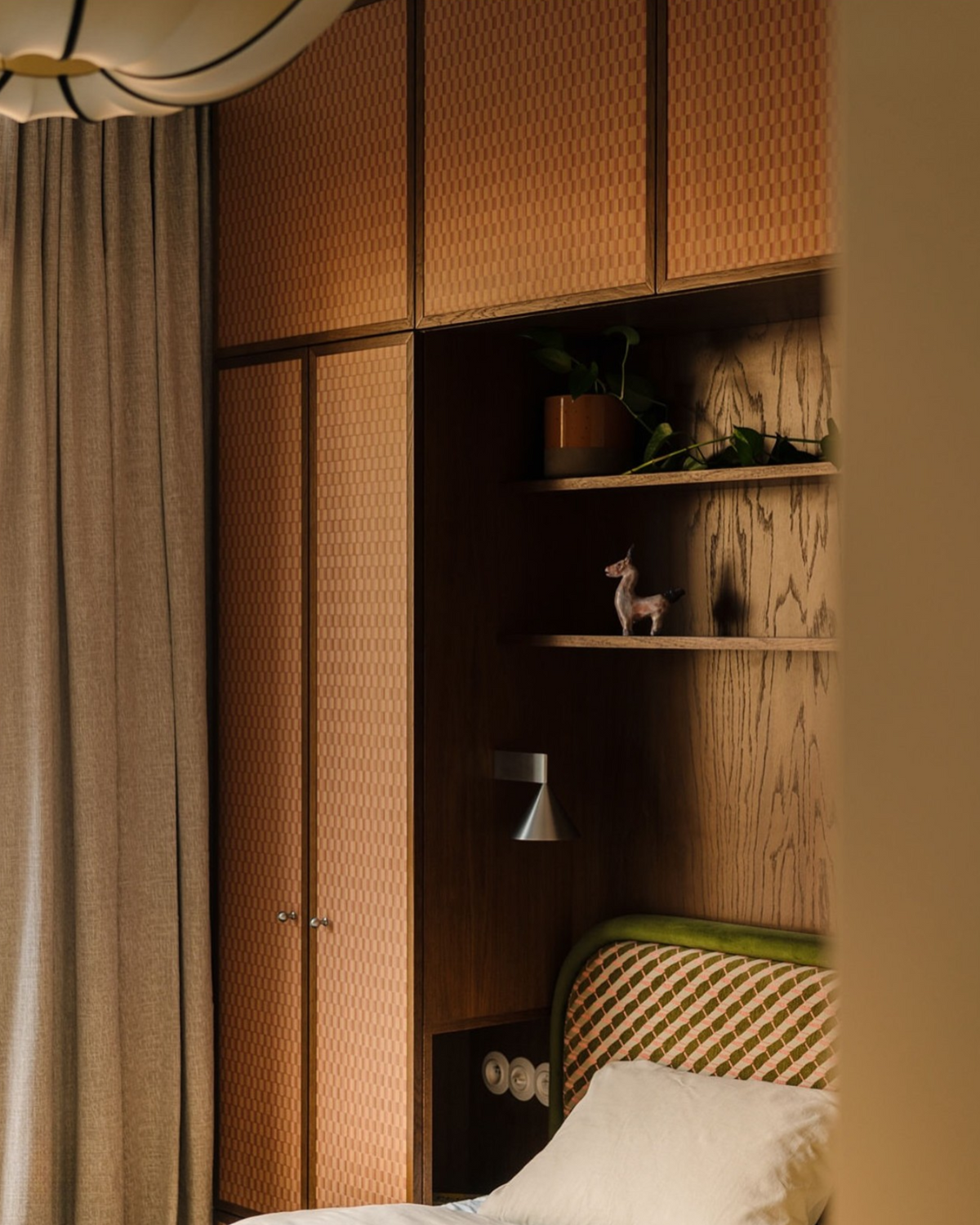
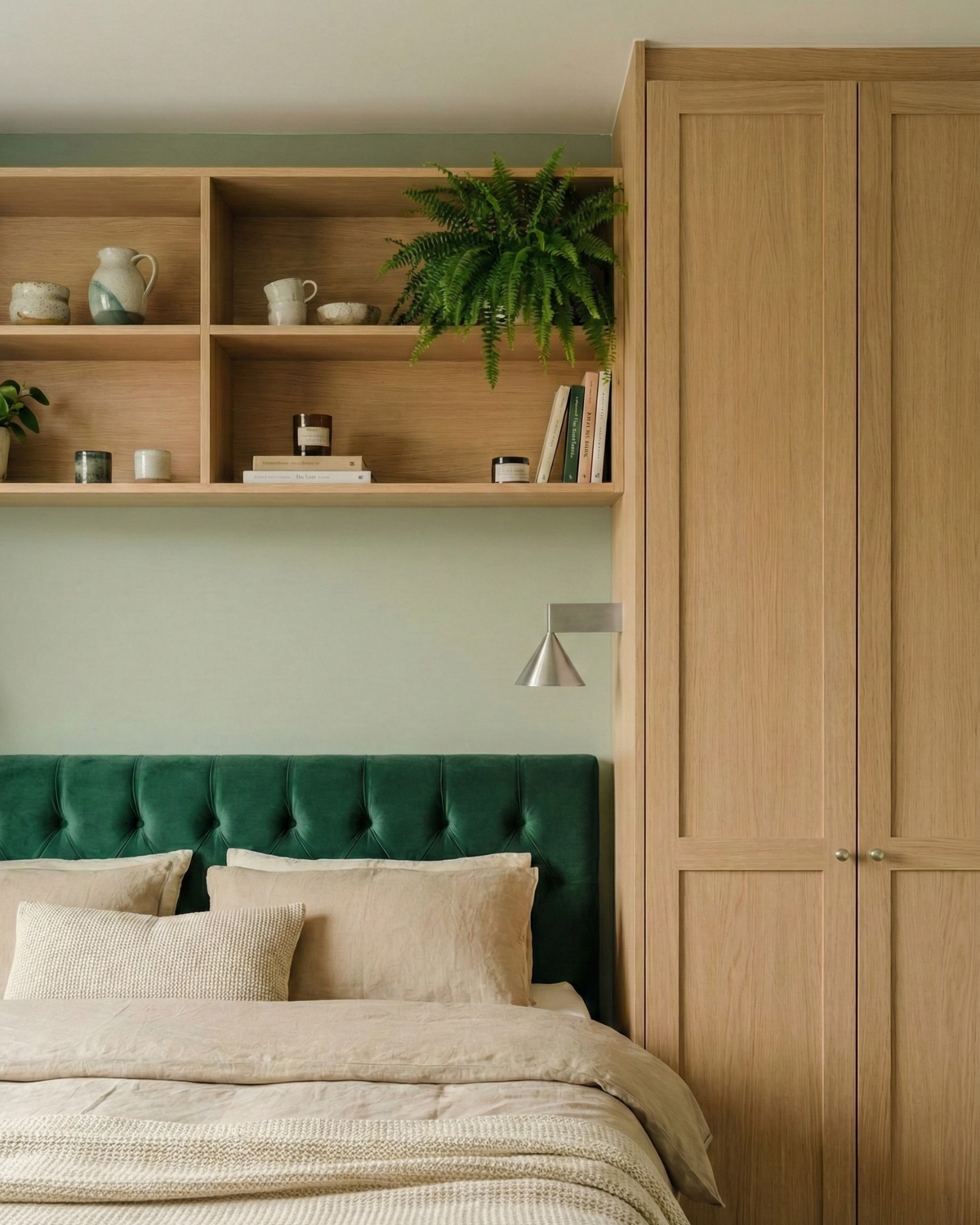
- Position: on the walls, between 1.50 m and 1.65 m from the floor at the headboard (up to 1.80 m in a hallway).
- Power: 8 to 15 W per LED point.
- Temperature: 2700 to 3000 K, never more.
- Number: two points minimum. A single one creates a visible imbalance.
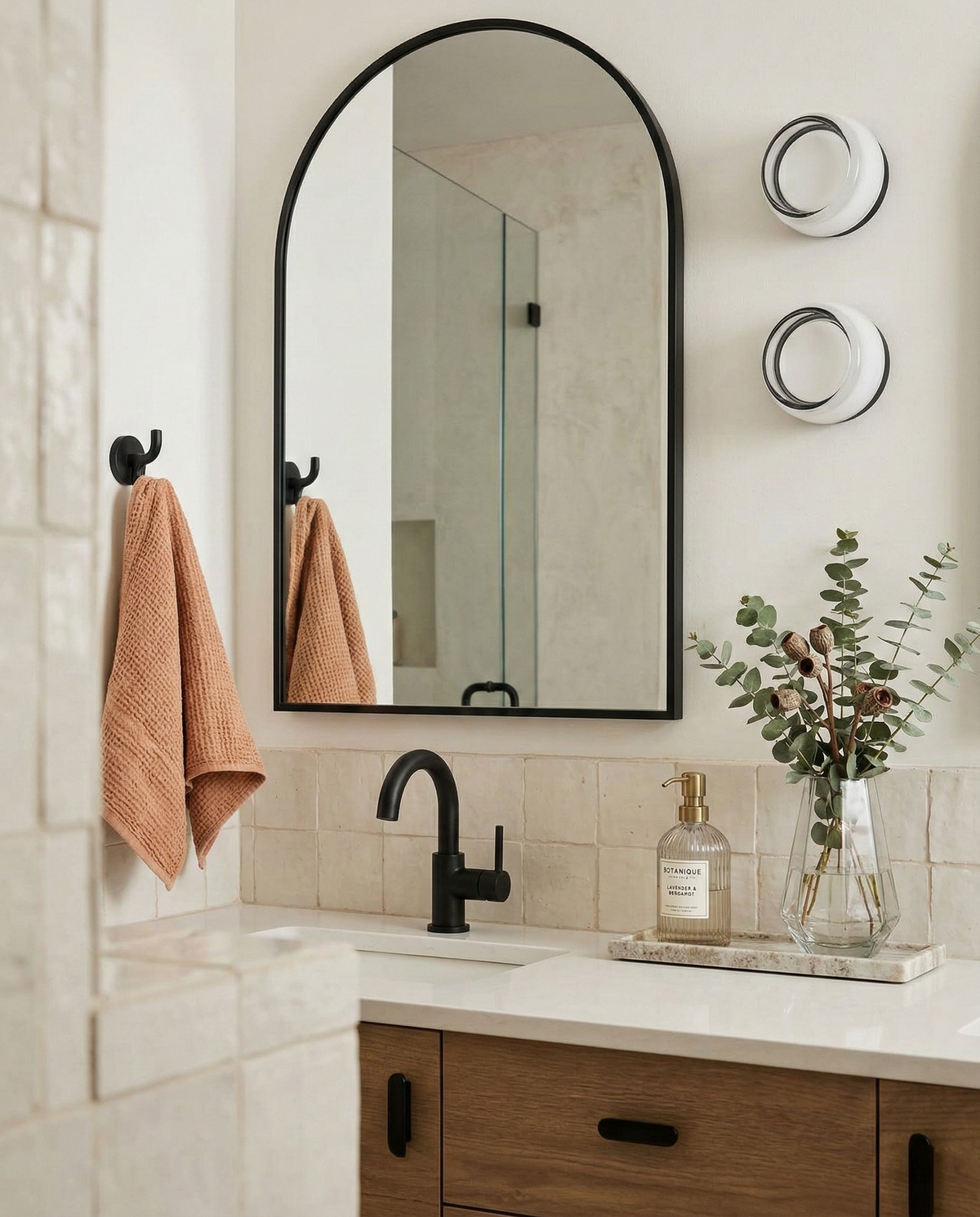
This layer produces the "hotel room" effect. A wall light that illuminates the wall transforms the surface into a light source: the wall becomes soft, wide, enveloping. It is the exact opposite of a ceiling light.
Layer 2—The function
The light for reading, applying makeup, checking a phone. It must be directed and close, not general.
- A directional reading light at the headboard, or a wall light with a downward beam.
- Ideal position: at eye level when you are sitting in bed, so about 1.10 to 1.30 m from the floor depending on the height of the mattress. The exact calculation is in our guide on the installation height of a wall light.
- Independent control from layer 1: non-negotiable, otherwise the two layers cancel each other out.
Layer 3—The accent
A low, weak, almost decorative source: a table lamp on a dresser, a strip hidden behind a headboard, a floor nightlight. Its function is not to illuminate but to break the uniformity. This is what gives the impression of depth.
A bedroom with these three layers appears larger than a bedroom with a ceiling light of the same total power.
Should you really remove the ceiling light?
No. The right strategy is not to remove it, but to stop using it in the evening.
Keep it for three uses: cleaning, looking for objects, getting dressed in a hurry in the morning in winter. The rest of the time, it remains off. Many people install their wall lights and then discover they no longer turn on the ceiling light for weeks—that is the sign that the distribution is successful.
If you are renovating and really want to remove it: the light point on the ceiling is required by the NF C 15-100 standard in the main rooms of a new or fully renovated home. You can never use it. You cannot decide not to install it during a complete renovation.
The real budget
Here is what it costs to go from a "one ceiling light" bedroom to a three-layer bedroom, at today's prices on the French market.
| Item | Entry-level | Mid-range | Premium material |
|---|---|---|---|
| 2 wall lights | 80–110 € | 120–190 € | 190–300 € |
| 1 directional reading light | 40–60 € | 60–95 € | 95 €+ |
| Low / accent light | 15–40 € | 40–90 € | 100 €+ |
| Installation (if no existing DCL) | 0 € (yourself) | ~150 € electrician | ~150 € |
| Total | 135–210 € | 220–520 € | 385–650 € |
The item that counts is layer 1. It is the one that produces 80% of the perceived effect. A common and fair trade-off: put the budget on a beautiful pair of wall lights, and keep it simple on layers 2 and 3.
The five mistakes that ruin the result
1. Choosing by lumens. "2880 lumens" on a product sheet is a construction site spotlight argument, not a bedroom one. For an ambiance layer, aim for 300 to 700 lm per point. Beyond that, you have recreated a ceiling light, on the wall.
2. Mixing color temperatures. Three sources at 2700 K, 3000 K, and 4000 K in the same room produce a dirty look. Choose one value and stick to it everywhere. Our 2700 K or 3000 K comparison details the choice.
3. Wiring everything to the same switch. Three layers on a single circuit is a single layer.
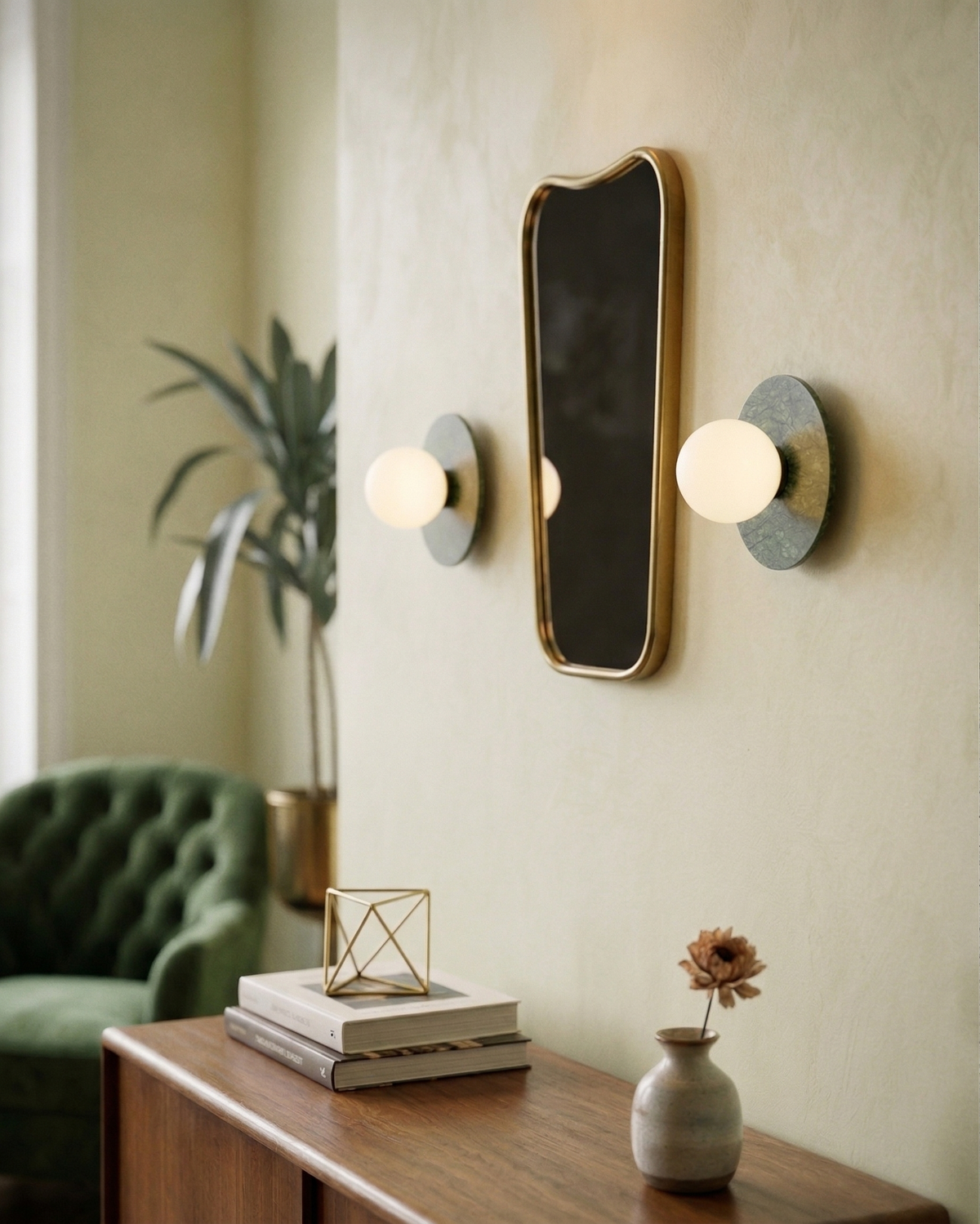
4. Installing a single wall light. A single light point on a bedroom wall looks accidental. Symmetry is what makes it "finished". It is the subject of one or two wall lights at the headboard.
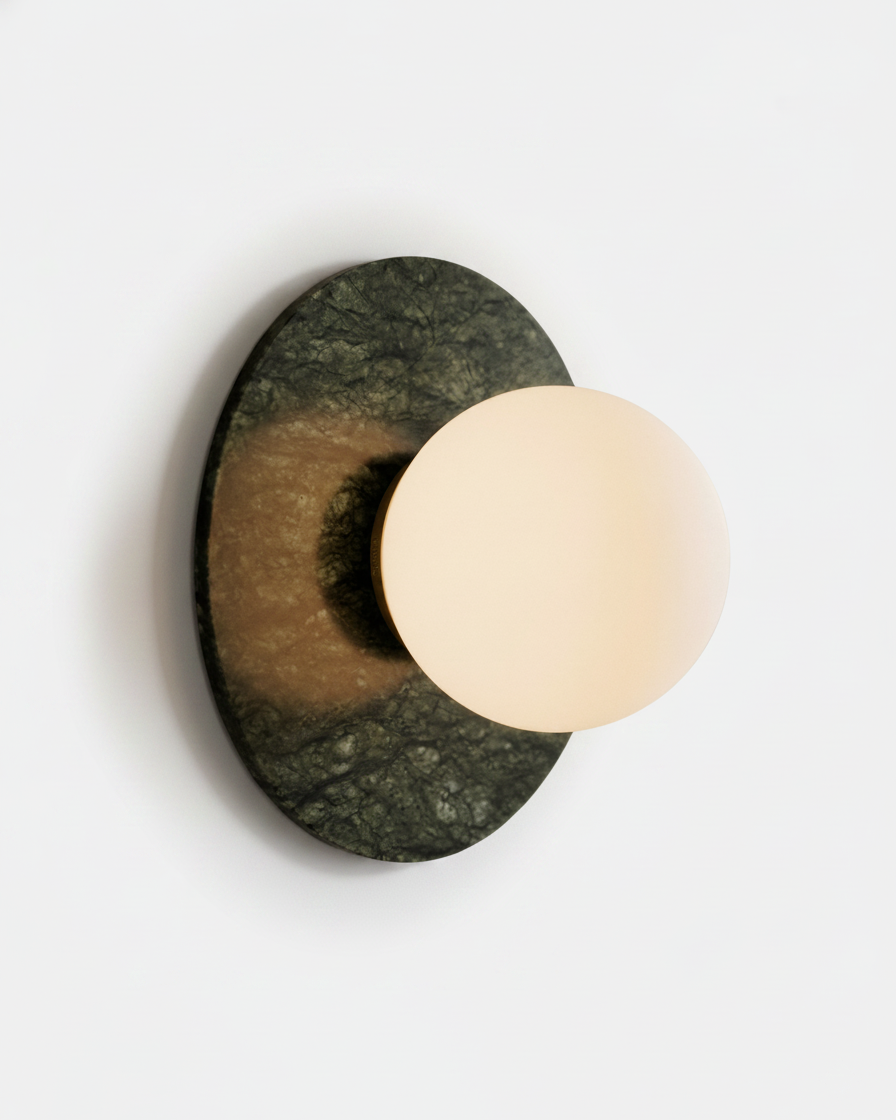
5. Only looking at the fixtures when they are on. A wall light is visible sixteen hours a day turned off. If the object is not beautiful when off, you have bought a light source, not a decorative element.
If you are a renter
Nothing of the above necessarily requires work. Three paths exist: connecting to an already in-place DCL outlet, using rechargeable models, or going with corded lamps that reproduce layer 1 by illuminating a wall. Comparison in wall light for renters, without drilling.
Where to start, concretely
- Tonight, turn off the ceiling light and turn on only your bedside lamp. Look at the room. You see what is missing: light on the walls, not in the center of the room.
- Identify the two walls that would benefit from being illuminated (generally the headboard wall, and the entrance wall).
- Check if a DCL outlet already exists at these locations—how to recognize it.
- Buy layer 1 first, in two copies. Layers 2 and 3 can wait.
To remember
- A hotel room almost never has a single point on the ceiling in the evening.
- Two 10 W wall lights are better than a 40 W ceiling light.
- 2700–3000 K everywhere, separate controls, beautiful object when off.
Frequently asked questions
Is a bedroom without a ceiling light sufficiently lit?
Yes, if you combine three sources of 8 to 15 W. The perception of brightness depends more on the distribution than on the total power. A room with four 10 W points appears brighter than a room with one 40 W point.
Can I remove the light point from the ceiling?
You can never turn it on. However, the NF C 15-100 standard requires its presence in the main rooms during new construction or a complete renovation.
What color temperature for a bedroom?
2700 K for a cocoon ambiance, 3000 K for a cleaner look that remains warm. Never 4000 K or more in a bedroom.
How many wall lights in a 12 m² bedroom?
Two at the headboard, possibly a third near the entrance or an armchair. Beyond that, you lose the contrast that creates relief.
Is a dimmer needed?
It is a real comfort, provided the fixture is actually compatible. Many products advertised as "dimmable" flicker with a standard wall dimmer. See dimmable wall light.
Starting with the right layer
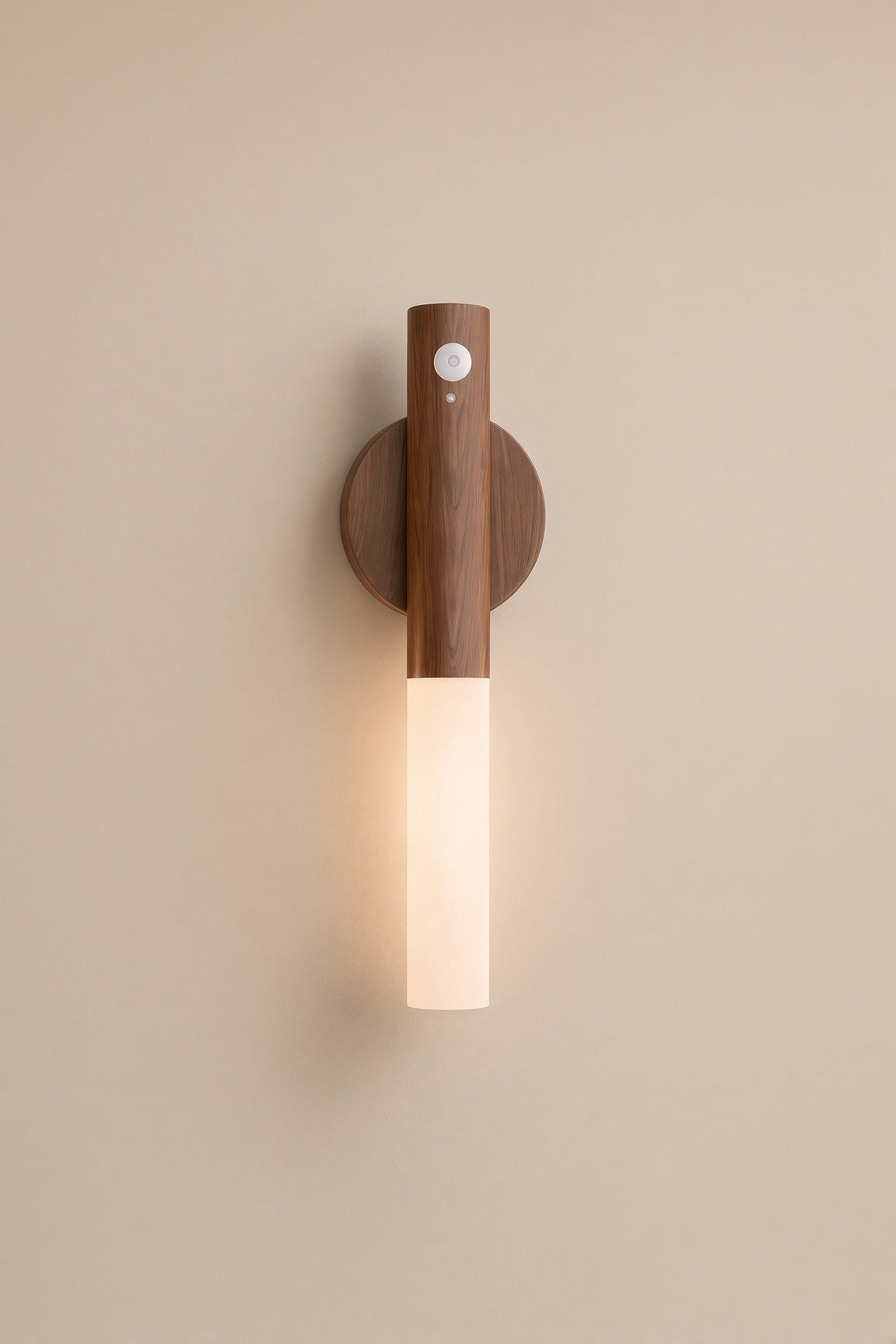
At faubourg & fils, layer 1 corresponds to the Bedroom & headboard collection: ambient wall lights in warm light, to be placed in two copies on either side of the bed. For walls where the material matters as much as the light, see Natural materials—travertine, natural stone, walnut, brass, rattan.