Article: Built-in LED or replaceable bulb: is your wall light disposable?

Built-in LED or replaceable bulb: is your wall light disposable?
In short: in an LED wall light, it is almost never the LED that dies — it is the driver, the small electronic box that powers it, whose capacitors age in 15,000 to 30,000 hours. The real question is therefore not "integrated LED or bulb?" but "is the source replaceable?". A standard socket wall light (E27, E14, G9) can be repaired by anyone. An LED soldered to the same board as its driver cannot.
A legitimate concern as soon as you spend more than €100 on a light fixture. A bulb, you change it. An integrated LED, if it fails, you throw away the whole object — or not. The reality is more nuanced, and it is decided before the purchase. A well-placed wall light lasts ten years: lighting a bedroom without a ceiling light.
Why manufacturers integrate LEDs
Three reasons, two of which are legitimate.
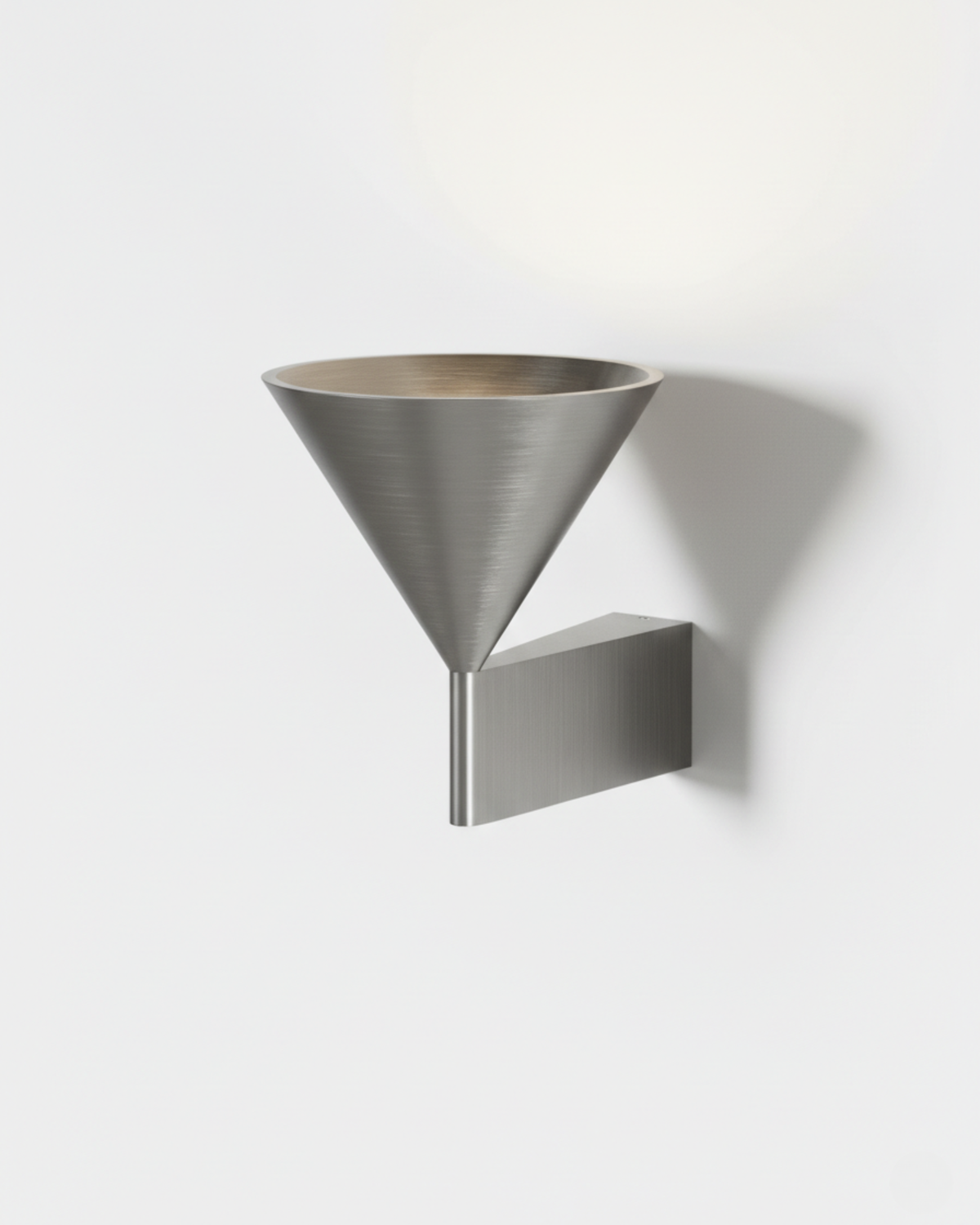
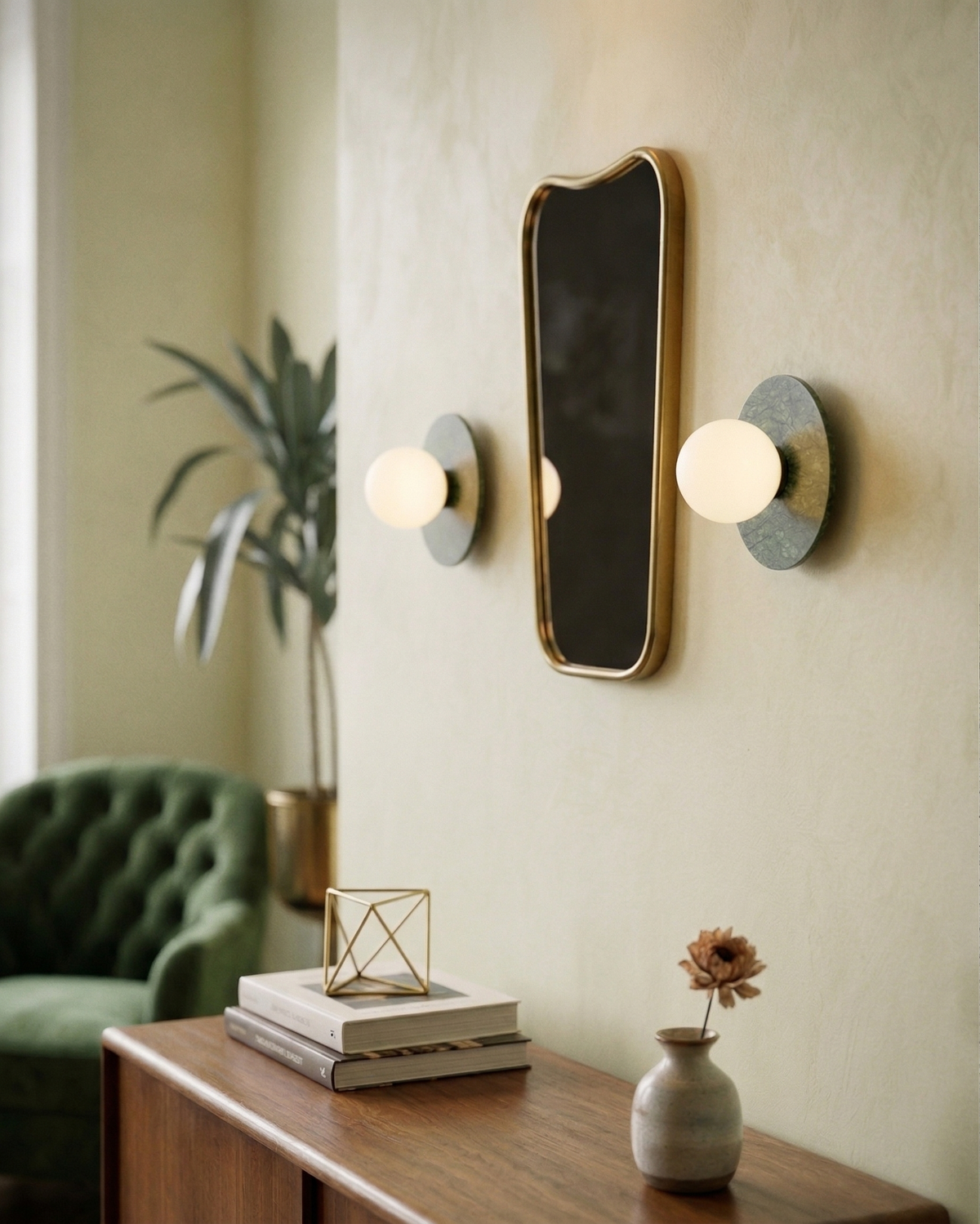
1. Slimness. An E27 socket requires a depth of about 10 to 12 cm, an E14 about 8. A flat LED module requires 2. Slim wall lights, "glued to the wall", only exist thanks to integrated LEDs.
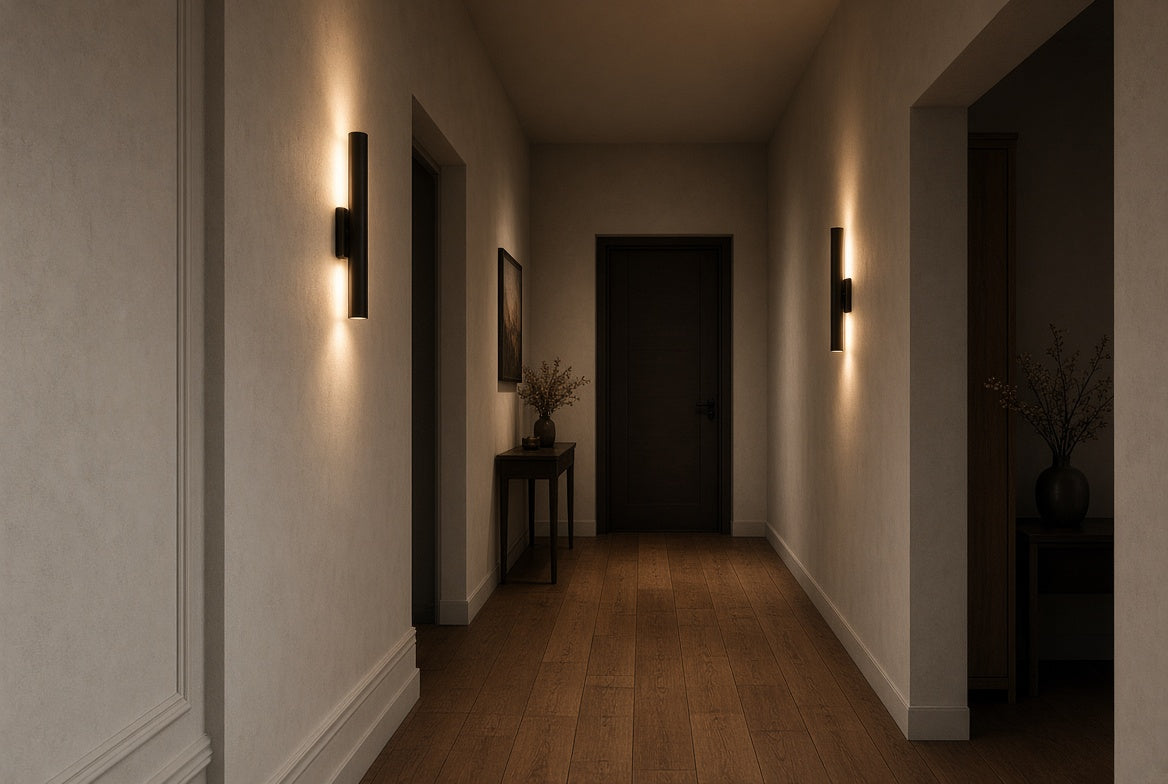
2. Diffusion quality. The strongest argument, and the least cited. Behind a translucent diffuser or in a double-beam wall light, a point source bulb creates a hot spot. A strip or a distributed COB module gives a homogeneous diffusion. On a grazing light wall light, the integrated LED is often a technical choice, not just an economic one.
3. Cost. An LED module costs less than a certified socket, wiring, and a compartment.
What really fails
The public debate is wrong about the subject.
| Component | Typical lifespan | Reality |
|---|---|---|
| The LED chip | 25,000 to 50,000 h advertised (L70) | At 3 h/day, 25,000 h represent more than 20 years. It does not "die": it gradually loses flux. |
| The driver | 15,000 to 30,000 h | It is what fails. Its electrolytic capacitors age, especially with heat. |
| Soldering and connectors | Variable | Second cause of failure, related to thermal cycles. |
A "dead" LED wall light is almost always a wall light whose driver is dead. The light part still works.
Heat accelerates everything. A driver enclosed in a poorly ventilated sealed box ages twice as fast as the same driver in an ventilated housing. A metal, thick wood or stone wall light, which dissipates well, lasts structurally longer than a closed plastic wall light — with identical components. This is also why a poorly designed IP65 outdoor wall light ages faster than an indoor wall light.
The question that settles everything: the socket
Before any technical discussion about drivers, there is a simple distinction.
| Type | What happens in case of failure? |
|---|---|
| Standard socket (E27, E14, G9) | You change the bulb. €5, two minutes, in any store. There is no driver in the light fixture: it is in the bulb. |
| Integrated LED, separate driver | Replaceable by an electrician in twenty minutes, for €20 to €60 for the part. The light fixture is repairable. |
| Integrated LED, driver soldered to the LED board | Not practically replaceable. The light fixture is disposable. |
If repairability is your main criterion, the answer is short: buy an E27 or E14 socket. You also choose your color temperature, your CRI, and you can make the light fixture dimmable by changing the bulb — it is the most reliable solution for dimmable that flickers.
The three questions to ask the seller
If the light fixture has an integrated LED, they are better than the mention on the sheet.
1. "Is the driver separate from the LED module?"
This is the question. Driver in a separate box → repairable. Driver soldered to the same board as the LEDs → disposable. A seller who does not know how to answer has never opened their product.
2. "Do you provide the replacement module, and for how many years?"
A serious manufacturer answers with a duration. Established publishers often keep parts for ten to fifteen years — one of the items that justify their price, see why some wall lights cost €500.
A young brand cannot promise fifteen years. It can promise three or five years. The gap between "we don't know" and "five years" is huge.
3. "Does the warranty cover the LED module, and for how long?"
Many warranties exclude "consumables", a category in which some sellers put the LED module. Make them specify it in writing.
In France, the two-year legal guarantee of conformity applies to any purchase from a professional. A driver failure at 18 months falls within this framework. A commercial warranty is only useful if it goes beyond.
The calculation over 15 years
Wall light at €120, turned on 3 h per day.
| Scenario | Cost at 15 years |
|---|---|
| Standard socket (E27/E14/G9) | 120 € + 3 quality bulbs (~€45) = ~€165 |
| Integrated LED, replaceable driver | 120 € + 1 driver (~€40) + possibly an intervention = ~€160 to €220 |
| Integrated LED, non-replaceable driver | 120 € + full repurchase around year 10–12 = ~€240 |
The gap is not in the technology. It is in repairability. And it widens the more expensive the light fixture is: for a pair, double everything.
What the regulation says
The European ecodesign regulation applicable to light sources provides, unless technically justified, that the source and its control equipment can be removed without permanent damage. Objective: limit disposable light fixtures.
In practice, the "technical justification" exception is widely used, and control is limited on imported products. Do not count on the regulation: ask the question to the seller.
Two other reflexes:
- Check the CE marking and, ideally, a downloadable declaration of conformity.
- A product that displays a two-year commercial warranty where the legal warranty is already two years offers you nothing more.
So, what choice to make?
Choose a standard socket if:
- you want to be able to change the color temperature later,
- you want maximum repair simplicity,
- you want to make the light fixture dimmable yourself,
- the depth of the light fixture does not bother you.
Accept an integrated LED if:
- the shape requires homogeneous diffusion or a low thickness,
- the seller confirms that the driver is separate,
- the slimness is part of what you are buying.
Refuse an integrated LED if:
- the seller cannot say if the driver is separate,
- no spare parts are offered,
- the light fixture is entirely closed, in plastic, without apparent dissipation.
The shortcut
One sentence, to ask before any purchase of an LED light fixture over €80:
“If the driver fails in eight years, what do I do?”
Three possible answers. "You change the bulb" is the best. "You order a replacement module from us" is good. "That won't happen" means you will throw away the wall light.
Frequently asked questions
Is an integrated LED really disposable?
Not necessarily. It all depends on whether the driver is in a separate box (replaceable in twenty minutes, €20 to €60) or soldered to the same board as the LEDs.
What is the real lifespan of an LED wall light?
The chip is rated for 25,000 to 50,000 hours, which is more than twenty years at three hours a day. The driver generally lasts 15,000 to 30,000 hours. It is what determines the end of life.
Is an E27 socket wall light more reliable?
It is above all more repairable: the spare part is a commercial bulb. However, behind a diffuser, a point source bulb can create a visible hot spot.
How to know if the driver is replaceable?
Ask before the purchase. Driver in the base or remote = replaceable. Driver soldered to the LED board = no. Also ask how many years the part will remain available.
What to do if my integrated LED fails at 18 months?
The two-year legal guarantee of conformity applies to any purchase from a professional in France.
The safest path
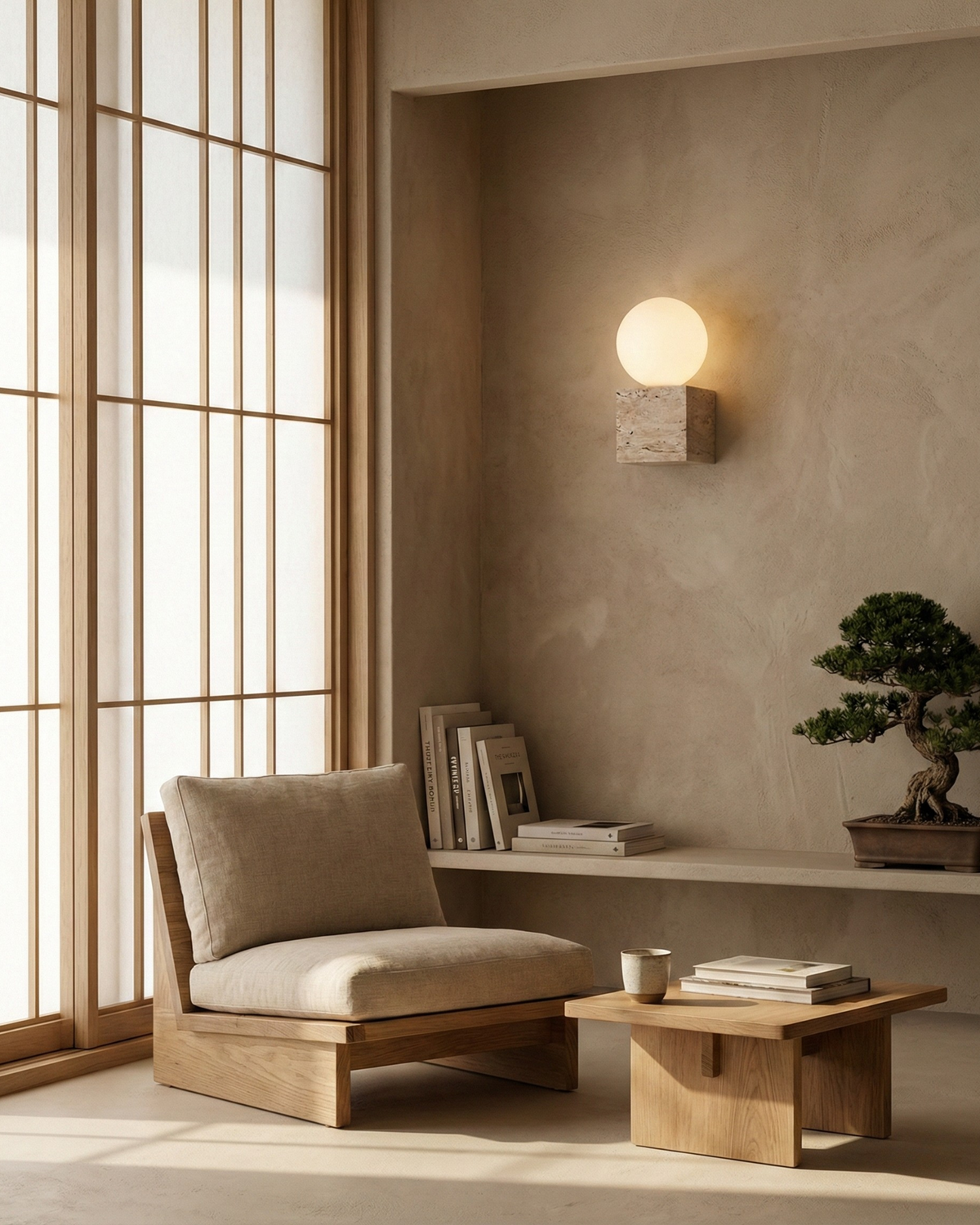
If repairability matters to you, filter by socket before anything else. At faubourg & fils, a part of the indoor wall lights works with a standard E27 socket — including in the Natural Materials collection, where the body is in stone or wood and the source remains yours. In ten years, the spare part will be a €5 bulb.